¡Feliz feria! Today is Sunday, November 22, 2026, which is the final day of the Miami Book Fair. This event is the biggest and longest-running literary festival in the United States. It happens every year at the Wolfson Campus of Miami Dade College in Downtown Miami. For many families in Florida, this Sunday is a main day for community celebration and a time to meet before the Thanksgiving holiday begins. The fair started on November 15 and has lasted for eight days, with the final three days, from Friday, November 20, through today, forming the Street Fair.
The history of this celebration started in 1984. At that time, it was caleld Books by the Bay. Mitchell Kaplan, Eduardo J. Padrón, and other local bibliophiles started the event because they wanted to promote a culture of reading in Miami. Some people at the time saw the city as a literary desert, but the founders thought that the local community had a deep interest in books and stories. Since its first year, the event has grown into a huge international gathering that includes over 500 authors and draws 200,000 visitors each year.
The fair has origins in the multicultural identity of South Florida. Because Miami is home to many people from the United States, Cuba, Venezuela, Colombia, and Haiti, the programming includes events in various languages. The fair offers sessions in English, Spanish, and Haitian Creole. These programs allow residents to hear stories in their native tonngues and celebrate the literary traditions of their homelands. The connection between language and heritage is a main part of the fair each year.
In 2026, the fair keeps its tradition of offering specialized tracks for various communities. The Ibero-American Authors series is a big part of the schedule, providing a space for Spanish-speaking writers to share their work. For those who speak Spanish, the fair is a spot to find the newest litterature from across Latin America and Spain. This emphasis on the Spanish translation of ideas and stories helps bridge the gap between different cultures in Florida. It is a time when the written word helps people maintain a connection to their roots while living in the United States.
The Haitian community also has a special area at the fair through programs like Haitian Stories & Spirits. These events look at the oral and written traditions of Haiti. Authors write and speak in Haitian Creole translation and French, sharing the history and folklore of their nation with the people of Little Haiti and beyond. This Sunday, families frequently stroll through the campus to hear these stories, making the fair a part of their own family history in Florida.
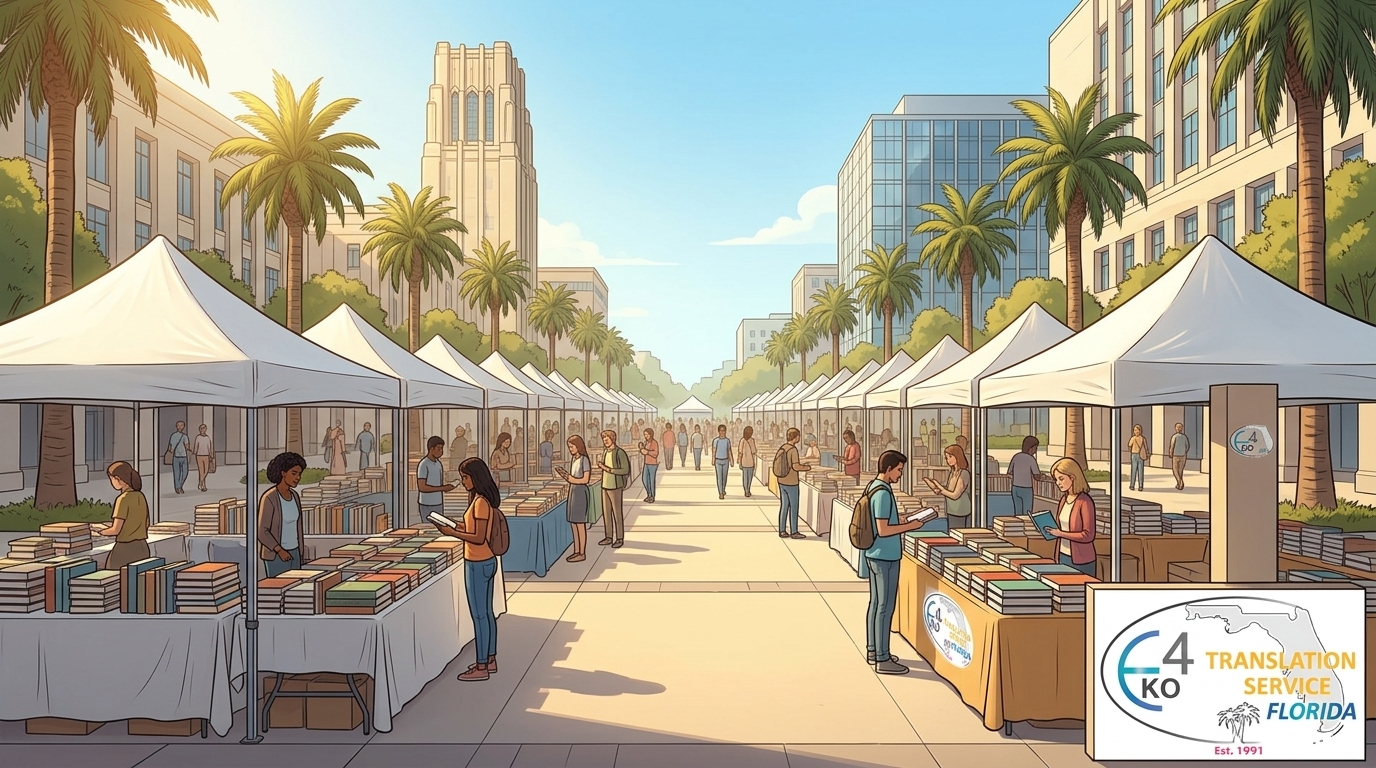
The Street Fair is the most popular section of the eight-day event. It has more than 250 exhibitors who set up tents along the streets of the Miami Dade College Wolfson Campus. These exhiibtors are major publishers, independent presses, and people who sell antiquarian books. Visitors walk through the rows of tents to find uncommon editions, new novels, and educational materials. The feeling is academic and festive, as people of all ages look at the collections.
Families frequently spend their time in Children’s Alley. This zone has interactive storytelling and performances that are made for children. It is a tradition for parents to take their children here to meet authors and participate in activities that promote reading. These gatherings are usual for families from diverse backgrounds, including those with roots in Venezuela or Colombia, who want their childern to value both English and their family’s native language. The fair acts as a cultural kickoff to the holiday season, occurring just before families meet for Thanksgiving dinner.
The Evenings With series is another tradition that happens during the week leading up to today. This series has high-profile authors who talk about their latest books in front of big audiences. These sessions often start long conversations about history, identity, and the future of literature. While these events take place all week, the final Sunday is when the whole community comes together for the closing of the fair. It is a day when the campus is filled with people who share a common love for books and the different languages sppoken in Florida.
The Miami Book Fair is about the strength of documents and the written word. For many people visiting the fair, documents are a big part of their lives in Florida. Whether someone is a student at Miami Dade College or a business owner in Downtown Miami, they often need to show personal and business documents to local institutions. These documents must be read in English by the Florida Department of Highway Safety and Motor Vehicles, county clerks, and Florida scohols. EKO 4 Translation Service Florida helps people by providing the translations they need for these official uses.
When a family moves to Florida from a country like Cuba or Venezuela, they bring important records with them. These are birth and marriage certificates, as well as diplomas and transcripts from schools in their home countries. Florida colleges and universities need these documents to be in English for the admissions process. Similarly, employers and Florida courts need to understand the meaning of legal papers and contracts. EKO 4 provides certified translation services to ensure that these documents are prepared for use in Florida institutions.
The requirement for accurate paperwork also includes immigration paperwok. USCIS requires particular translations for many kinds of applications. People who are making their lives in Florida often find that they need a translation of their driver’s license or medical records to access services here. The fair celebrates the charm of language, and EKO 4 manages the technical side of language by ensuring that documents from the homeland are understood by authorities in the United States.
Businesses in Miami also join the fair, and they have their own requirements for document translation. Contracts, business agreements, and financial records often go between Florida and other countries. For a business to run legally and well, these documents must be in a language that all parties and local regulators understand. EKO 4 Translation Service Florida provides translation of business documents and certified translation for these business needs. If a document is sent from Florida back to a homeland, an apostille is often required to check its authenticity.
Students who attend the fair might be looking for books to help them with thier studies. If they have academic credentials from another country, they will need those diplomas and transcripts translated into English to continue their education in Florida schools. This is a common situation for the many international people who live in neighborhoods like Little Haiti or the suburbs of Miami. Having these documents translated allows them to follow their aims and contribute to the local economy.
If you are attending the fair today and see you have documents that need to be translated for school, work, or legal needs, you can request a free estimate online. It is a simple process to order a translation online for your birth certificates, marriage certificates, or business contracts. EKO 4 is here to help the people of Florida communicate with the institutions that reqiure clear and accurate English documents. As the fair ends today, we celebrate the stories that unite us and the languages that define our community in Florida.