Happy Carnival! Today, October 11, 2026, the air in South Florida is thick with the sweet scent of jerk seasoning and the infectious pulse of soca music. It is the day of the Miami Carnival Parade and Concert, the magnificent culmination of a week-long festival that has transformed the region into a vibrant tapestry of Caribbean culture. While the festivities began on October 3, today marks the grand finale at the Central Broward Park & Broward County Stadium in Lauderhill. For those with roots in Trinidad and Tobago, Jamaica, Haiti, the Bahamas, Guyana, Saint Lucia, Barbados, Grenada, Antigua, and the Dominican Republic, this is more than just a parade; it is a homecoming, a celebration of resilience, and a vivid display of a heritage that continues to flourish in the Sunshine State.
The streets of Lauderhill, Miami, and Tamarac are alive with the spirit of the islands. Families gather in their backyards for early morning breakfasts before heading to the stadium, while masquerade bands prepare their elaborate costumes for the final judging. This event is a massive cultural and economic driver for Florida, bringing together over 100,000 attendees to witness a spectacle that has been a staple of the community since 1984. EKO 4 Translation Service Florida joins in the celebration, recognizing the deep cultural bonds that connect the Caribbean diaspora to their new homes in Florida, and the importance of preserving these connections through every stage of life, from education to business.
The story of the Miami Carnival is one of evolution and cultural pride. It originated in 1984, initially driven by the Trinidadian community who sought to recreate the magic of their homeland’s pre-Lenten celebrations. Over the decades, it has blossomed into a pan-Caribbean event, reflecting the diverse demographics of South Florida. The roots of this celebration reach deep into history, specifically to the tradition of Canboulay. In Trinidad, enslaved people and free blacks staged vibrant celebrations as a way to mock the masquerade balls held by French plantation owners. These early participants turned a history of oppression into a performance of freedom, using masks, drums, and dance to reclaim their identity.
This history is still felt today in the rhythms of the steelpan and the satirical nature of many masquerade costumes. Because of these historical connections, many families still maintain close ties to the French-speaking Caribbean. For those managing family affairs or heritage properties in regions where the colonial influence remains, French translation services are often necessary to ensure that historical records and legal documents are clearly understood by Florida institutions. The festival serves as a reminder that while the languages of the Caribbean – English, French, Spanish, and Creole – are diverse, the spirit of the Carnival is universal.
Holding the event during the Columbus Day weekend was a strategic choice made decades ago to take advantage of Florida’s favorable October weather and the availability of the diaspora. It allows thousands of people to travel from across the state and beyond to participate in the Junior Carnival, the steelpan competition known as Panorama, and the energetic pre-dawn celebration of J’ouvert. Today’s parade is the peak of this journey, where the history of the past meets the vibrant reality of the present.
While the event bears the name of Miami, the heart of the 2026 celebration is firmly planted in Lauderhill, Broward County. This area, along with neighborhoods in Tamarac and Miami, has become a sanctuary for Caribbean culture. The local community is a rich blend of backgrounds. You will find Guyanese families sharing stories with neighbors from Saint Lucia and Barbados, and Bahamian traditions mixing with the vibrant energy of the Dominican Republic. This intersection of cultures is most visible in the Caribbean Food Village at the stadium, where vendors offer traditional dishes like curry, beef patties, and jerk chicken.
For the Haitian community, which has a significant presence in South Florida, the Carnival is a time to showcase their unique contributions to the Caribbean mosaic. Whether it is through the food or the music, the influence of Haiti is undeniable. When families from this community need to submit birth certificates or marriage licenses to Florida courts or the Florida Department of Highway Safety and Motor Vehicles, they often seek Haitian Creole translation services to ensure their personal documents are handled with the respect and accuracy they deserve. Similarly, those with roots in the Dominican Republic may require Spanish to English translation services as they navigate life, work, and education in Florida.
The neighborhoods of Lauderhill and Tamarac are more than just geographical locations; they are the places where traditions are kept alive. On Carnival Sunday, these neighborhoods transform. Front porches are decorated, and the sound of calypso music wafts through the air. It is a day when the paperwork of daily life – the contracts, the business documents, and the school transcripts – is set aside in favor of the drum and the dance. Yet, the strength of this community lies in its ability to balance these traditions with the requirements of living in a new land.
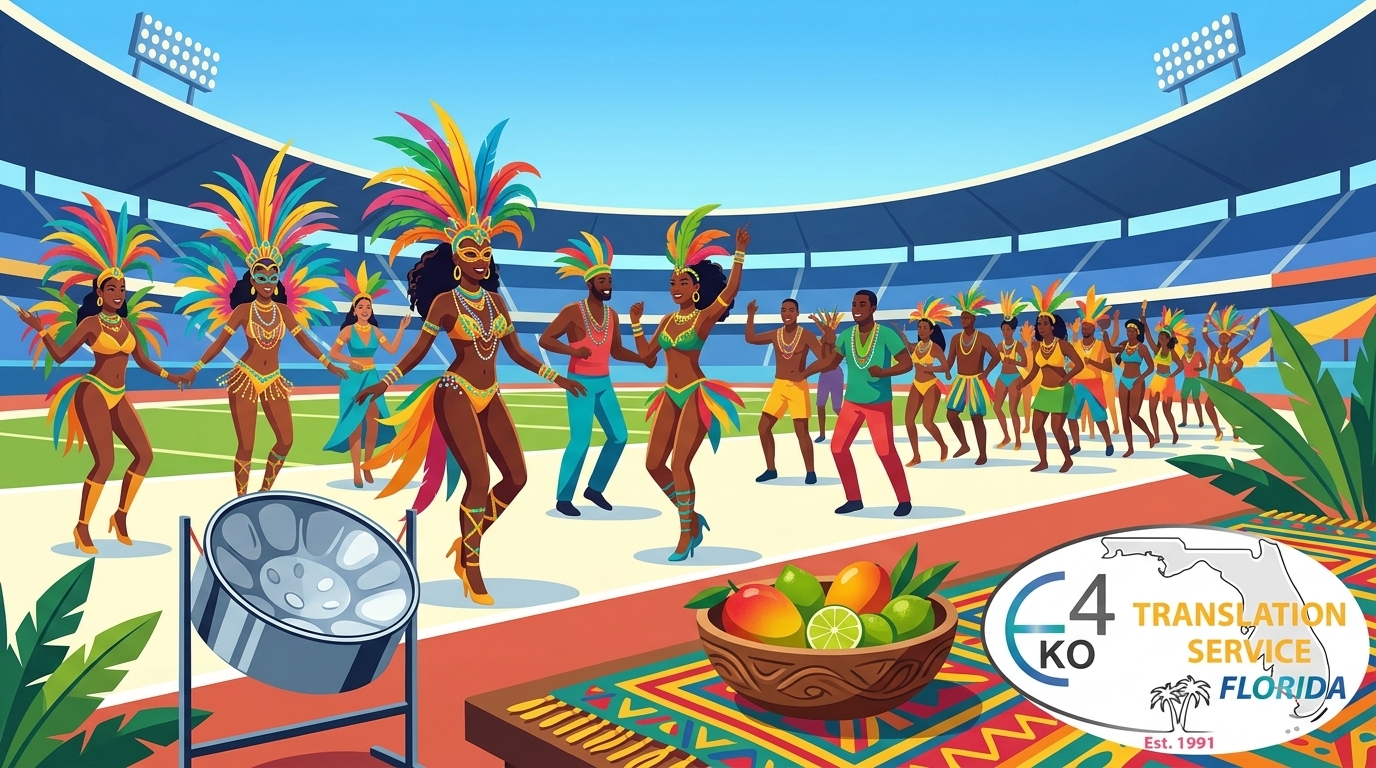
The Sunday parade is a feat of artistic and athletic endurance. More than 20 masquerade (mas) bands, featuring over 18,000 participants, take to the grounds of the Central Broward Park & Broward County Stadium. These participants wear elaborate, colorful costumes decorated with thousands of feathers and beads, some standing several feet tall and requiring immense skill to navigate. Each band competes for prestigious titles, judged on their creativity, energy, and the way they move to the beat of soca and calypso music. The spectacle is a sea of shimmering sequins and vibrant silks, representing the unique identity of each Caribbean nation.
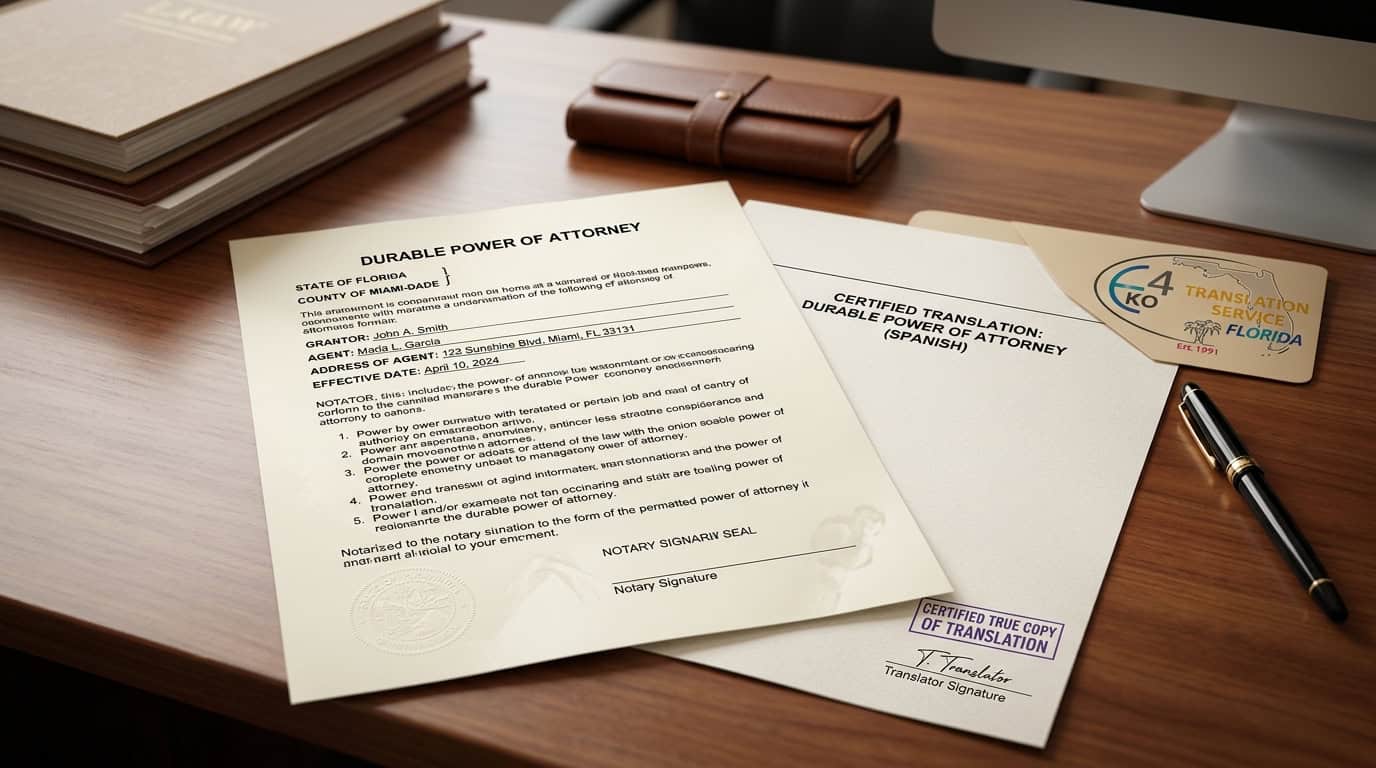
Behind each costume is months of work by designers and community members who gather in “mas camps” to sew and glue every detail by hand. This dedication mirrors the hard work of the Caribbean diaspora in their professional lives. Many participants are students at Florida schools, colleges, and universities, or business owners who contribute to the local economy. When these individuals need to present their international diplomas and transcripts to Florida employers or academic institutions, they rely on certified translation to bridge the gap between their education abroad and their goals in Florida. EKO 4 understands that a diploma is more than just a piece of paper; it represents the same dedication seen in the painstaking creation of a Carnival costume.
Following the parade, the live concert features international Caribbean artists, bringing the crowd to its feet. The music serves as a bridge, connecting the younger generation born in Florida with the traditions of their parents and grandparents. It is a moment of pure joy, where the complexities of life – immigration paperwork, medical records, and legal contracts – are briefly replaced by the harmony of the steelpan and the collective voice of thousands singing in unison.
As the festivities continue today, it is important to reflect on the practical side of maintaining a life between two worlds. The people of the Caribbean diaspora are builders – they build families, businesses, and communities here in Florida. This growth often requires navigating the official requirements of Florida institutions. For a family from Jamaica or Trinidad and Tobago, moving to Florida might mean needing a certified translation of a marriage certificate for a county clerk. For a professional from Guyana or Grenada, it might involve the translation of medical records or business contracts to ensure they can continue their practice or trade without delay.
EKO 4 Translation Service Florida provides the essential support needed for these transitions. We understand that personal documents like birth certificates and driver’s licenses are vital for interacting with the Florida Department of Highway Safety and Motor Vehicles or for completing immigration paperwork for USCIS. The process of moving between the homeland and Florida is a journey that requires clear communication. Whether it is a document going from Florida back to the islands or arriving here from overseas, the need for a professional touch is constant.
Our services include the translation of personal and business documents, as well as the provision of an apostille for those who need their Florida documents to be recognized internationally. We strive to make this process as seamless as the transition between the different sections of today’s parade. For those who are currently celebrating but know they have upcoming administrative tasks, obtaining a free estimate for their translation needs can provide peace of mind, allowing them to return to the music and the dancing.
The Miami Carnival Parade and Concert is a reminder that culture is not just something we remember; it is something we live every day. It lives in the way we speak, the food we share, and the documents that tell our life stories. EKO 4 is proud to serve the Caribbean community in Florida by ensuring that their stories are understood by everyone, from Florida courts to potential employers. We handle a wide range of documents with the care and descriptive precision they require, ensuring that the essence of the original text is preserved in English.
As the sun begins to set over Lauderhill and the final notes of the concert echo through the stadium, the work of the diaspora continues. Tomorrow, many will return to their roles as nurses, teachers, entrepreneurs, and students. They will carry with them the energy of the Carnival and the pride of their heritage. When the time comes to handle the practicalities of life in Florida, whether it is applying for a new job or enrolling a child in school, the need for certified translation will remain a vital part of the journey. You can easily order a translation online to begin the process of making your international documents work for you here in Florida.
Today is a day for celebration, for feathers and beads, and for the deep, resonant sound of the Caribbean heart. From the historic streets of Trinidad to the bustling neighborhoods of South Florida, the Carnival is a testament to the enduring power of community. EKO 4 Translation Service Florida wishes everyone a safe and joyous Carnival. May the rhythms of today carry you through the year, and may your heritage always find a clear voice in your new home. Happy Carnival!