
As we navigate through May 2026, the translation and linguistic services landscape is undergoing its most significant administrative overhaul in a generation. At the heart of this shift is the Language Access for All Act of 2026. Introduced earlier this year, this landmark federal legislation is designed to codify and modernize language access protections across all federal agencies. For the first time, these language access regulations establish a unified technical standard for multilingual communications, moving beyond simple compliance into a realm of high-precision, digital-first requirements.
This act requires every federal agency to develop formal, transparent language access plans. For businesses and individuals, this means that the barrier for “acceptable” translation has been raised. No longer is it enough to provide a general translation; the new standards demand a level of accuracy and technical formatting that can only be achieved through professional oversight. As a leading provider in the Sunshine State, EKO 4 Translations Florida has been at the forefront of implementing these standards to ensure our clients remain compliant with these evolving federal mandates.
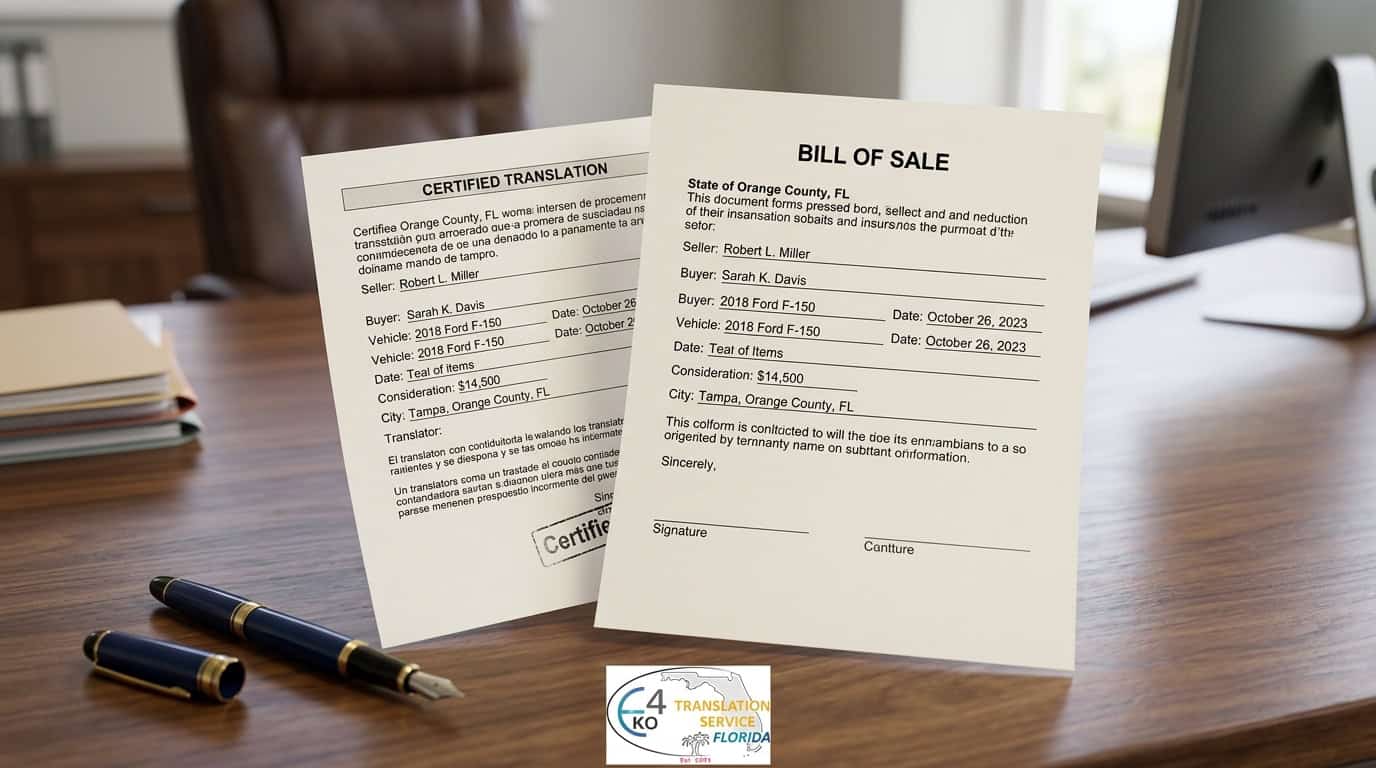
One of the most immediate practical effects of these 2026 administrative shifts is seen in the United States Citizenship and Immigration Services (USCIS) processing systems. USCIS has intensified its “digital-first” initiative, employing advanced Optical Character Recognition (OCR) technology to parse submitted documents. However, this technological leap has come with a steep learning curve for the public. Industry data from May 2026 indicates that even minor formatting errors or low-contrast text in translated documents are leading to a spike in Requests for Evidence (RFEs), frequently stalling applications by 60 to 90 days.
For those navigating these digital hurdles, the importance of professional preparation cannot be overstated. A translation must now be flawlessly formatted for machine reading while maintaining the absolute semantic integrity required by human adjudicators. To ensure your documents meet these rigorous digital standards, you can get a free quote from our specialists who understand the intricate formatting requirements of the current USCIS systems.
Closer to home, Florida remains a critical hub for international legal and personal document processing, but the rules of the game are changing. In May 2026, the Florida Secretary of State implemented a significant policy change regarding third-party apostille services. Third-party agencies are now required to drop off documents one business day and pick them up the next, effectively ending “same-day” walk-in services for intermediaries.
Furthermore, standard mail-in apostille processing through the Florida Division of Corporations in Tallahassee is currently facing significant backlogs, with turnaround times reaching 25 to 35 business days. This administrative bottleneck has driven a surge in demand for Remote Online Notarization (RON) and specialized concierge services. EKO 4 Translations Florida continues to adapt to these shifts, leveraging local expertise to navigate the 10 to 12-week backlogs often seen at the federal level for U.S. Department of State authentications. When timing is critical, it is often more efficient to order your translation online through a certified agency that can manage the administrative workflow from start to finish.
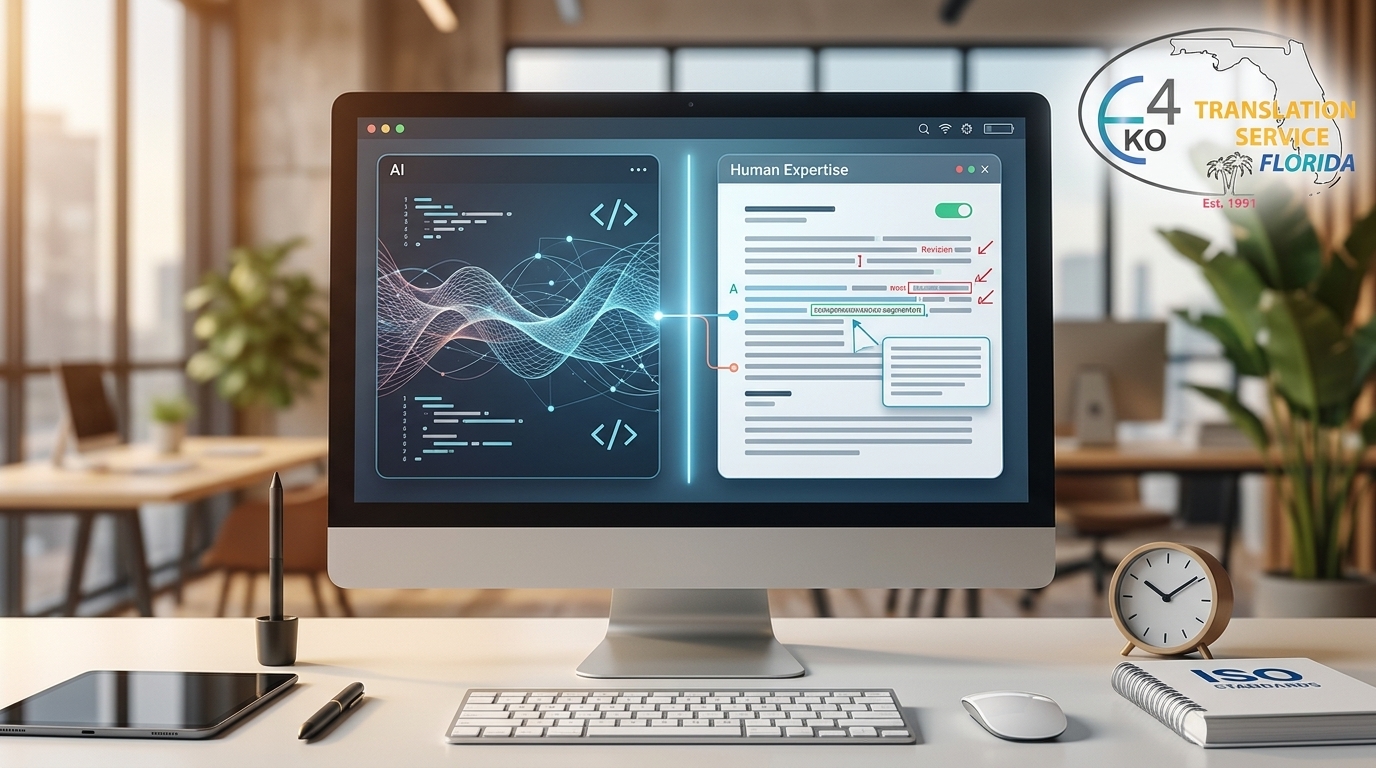
The global translation market in 2026 has officially moved past the era of “Machine Translation” and into what experts call “AI Orchestration.” According to the ELIS 2026 report, approximately 63% of freelance translators now utilize automated tools, but the role has shifted from a simple linguist to an “AI Supervisor” or “Quality Architect.” The focus is now on Adaptive Machine Translation—systems that learn from human corrections in real-time to handle high-risk legal and medical content where generic AI still fails.
Professional agencies are increasingly differentiating themselves through strict adherence to ISO 17100 standards. These standards ensure a “Human-in-the-Loop” workflow, providing a safeguard against AI “hallucinations” that can be disastrous in legal or administrative records. As the industry gathers for events like the NAJIT 47th Annual Conference in June, the discussion is no longer about whether to use AI, but how to govern its use to maintain the ethical and professional standards that the language access regulations of 2026 now demand.
Finally, we are seeing a trend toward “hyper-localization.” Agencies are moving away from broad language categories in favor of regional specificity. In a state as diverse as Florida, translating for a Caribbean Spanish speaker versus a Mexican Spanish speaker is not just a matter of preference—it is often a requirement for clarity and legal standing under new language access policies. This level of nuance ensures that the message is not just translated, but truly understood within its local context.
EKO 4 Translations Florida remains committed to these high standards, combining the efficiency of 2026 technology with the indispensable nuance of certified human linguists. Whether navigating new federal laws or the specific administrative quirks of the Florida Secretary of State, working with an experienced agency is the best way to ensure your documents are accepted without delay.