La infraestructura administrativa que rige la autenticación de documentos en el Estado del Sol ha alcanzado un punto de inflexión significativo este mes. A partir de mayo de 2026, tanto profesionales como residentes se están adaptando a las regulaciones de apostilla de Florida actualizadas e implementadas por el Secretario de Estado de Florida. Estos cambios representan un cambio más amplio en la forma en que el estado maneja la verificación de firmas oficiales para su uso en el extranjero, alejándose de los modelos tradicionales de respuesta inmediata que antes definían el mercado expedito de Tallahassee.
Durante años, la industria dependió de un sistema que permitía a proveedores externos facilitar la autenticación rápida. Sin embargo, la nueva norma administrativa exige que los proveedores autorizados ahora deban entregar los documentos un día y recogerlos al siguiente día hábil. Esto pone fin efectivamente a la era del servicio presencial el mismo día para las agencias, una medida diseñada para agilizar los flujos de trabajo internos del gobierno, pero que requiere un giro estratégico por parte de las firmas de traducción y certificación. EKO 4 Translations Florida continúa monitoreando de cerca estos desarrollos para asegurar que nuestros clientes se mantengan a la vanguardia de estos obstáculos logísticos.
El impacto inmediato de estas regulaciones de apostilla de Florida es más visible en los plazos de procesamiento en la División de Corporaciones de Florida. A mediados de mayo de 2026, los tiempos de procesamiento estándar por correo se han extendido a un plazo de 25 a 35 días hábiles. Este retraso es el resultado de varios factores, incluido un mayor volumen de presentaciones comerciales internacionales y una transición hacia estándares de verificación digital más rigurosos.
En respuesta a estos retrasos, el mercado está experimentando un aumento masivo en la adopción de la Notarización Remota en Línea (RON). Al utilizar protocolos de notarización electrónica, los proveedores a menudo pueden evitar los retrasos iniciales de envío físico que afectan a las rutas tradicionales por correo. En muchos casos, estas vías administrativas digitales permiten completar el trámite en tan solo tres días hábiles, incluso con el nuevo mandato de recogida al día siguiente para la apostilla física en sí. Para entender cómo estos plazos afectan sus necesidades específicas, puede solicitar fácilmente un presupuesto gratuito para ver las opciones más actuales disponibles para su proyecto.
Mientras Florida actualiza sus procedimientos locales de apostilla, los estándares federales también están evolucionando. Para mayo de 2026, el Servicio de Ciudadanía e Inmigración de los Estados Unidos (USCIS) ha integrado plenamente la tecnología avanzada de Reconocimiento Óptico de Caracteres (OCR) en su proceso de revisión de pruebas. Esto significa que los estándares administrativos para la industria han pasado de la simple precisión a la “lectura mecánica”.
Los documentos que no cumplen con estándares de alto contraste y formato claro con fuentes estándar están provocando cada vez más Solicitudes de Evidencia (RFE) automáticas. Este cambio federal resalta la importancia de trabajar con una agencia de traducción profesional que comprenda las especificaciones técnicas de 2026. Ya no basta con proporcionar una traducción correcta; los metadatos administrativos y la claridad visual deben alinearse con los parámetros gubernamentales impulsados por IA. En EKO 4 Translations Florida, hemos actualizado nuestro control de calidad interno para asegurar que cada documento cumpla con estos requisitos federales de alta tecnología antes de que usted pueda pedir su traducción en línea a través de nuestro portal seguro.
Las noticias administrativas de mayo de 2026 también incluyen actualizaciones significativas del sistema judicial de Florida. El 18.º Circuito Judicial emitió recientemente la Orden Administrativa 26-05, que perfecciona los estándares para el acceso lingüístico y la conducta de los intérpretes. Un aspecto destacado de esta orden es el “Derecho de preferencia” para intérpretes autónomos certificados a nivel federal o estatal. Esta política garantiza que los profesionales certificados tengan prioridad sobre las personas “cualificadas” pero no certificadas para las asignaciones judiciales, reforzando el compromiso del estado con los altos estándares profesionales.
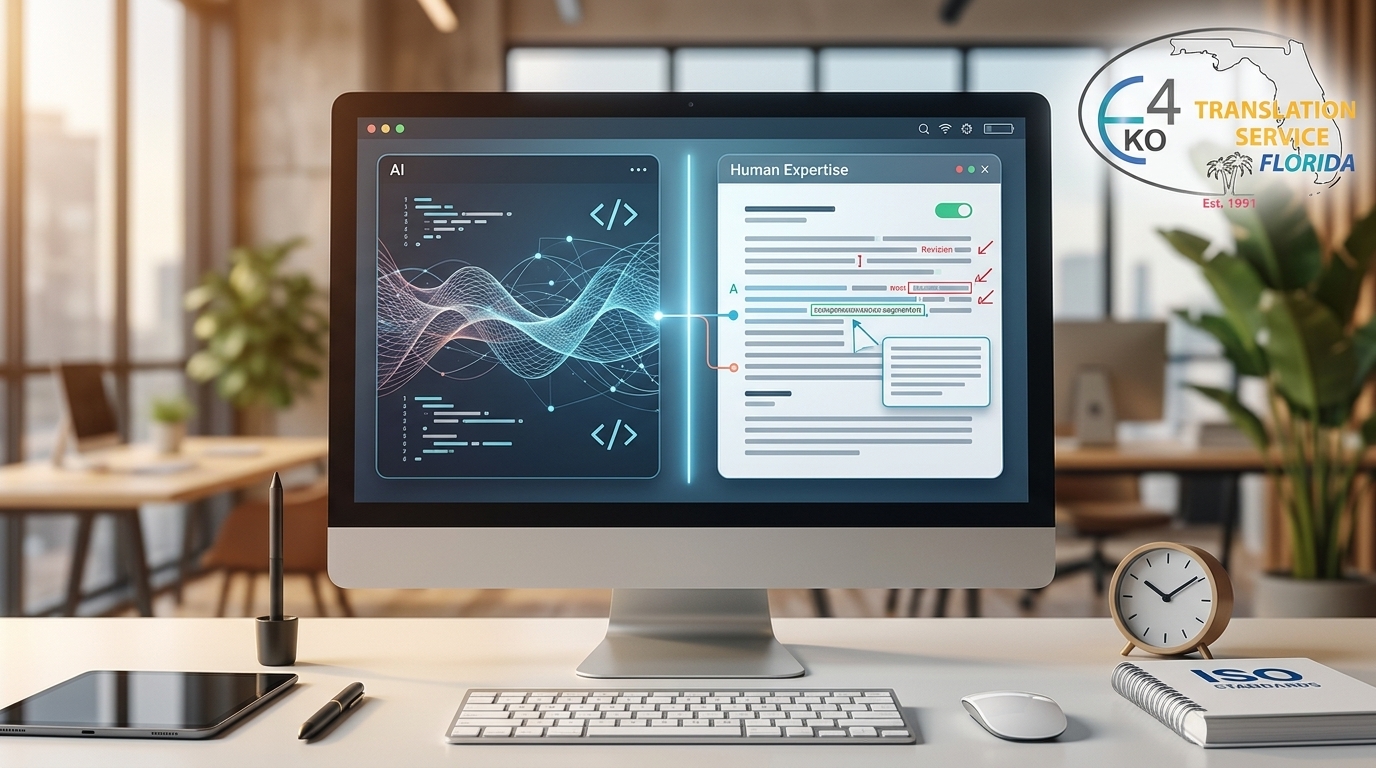
Además, la orden enfatiza una neutralidad estricta, prohibiendo a los profesionales del lenguaje explicar procedimientos judiciales o interactuar con los litigantes fuera del registro oficial. Este impulso por los límites profesionales refleja los temas de la próxima 47.ª Conferencia Anual de NAJIT en Atlanta, titulada “Más allá de la IA: El elemento humano insustituible”. La industria se está moviendo colectivamente hacia un modelo donde la IA se encarga del trabajo pesado de datos y volumen, mientras que los expertos humanos se centran en los matices legales, éticos y administrativos de alto riesgo.
En un entorno donde las regulaciones de apostilla de Florida y los estándares digitales federales cambian mensualmente, EKO 4 Translations Florida se mantiene como un pilar de confiabilidad. Se proyecta que el mercado global de servicios lingüísticos alcance más de 81 mil millones de dólares este año, impulsado en gran medida por estas complejas necesidades administrativas y tecnológicas. Nuestra agencia ha integrado flujos de trabajo de “Humano en el bucle” (HITL), asegurando que, si bien aprovechamos la velocidad de la IA de la era 2026, cada documento final sea revisado por un profesional que comprenda los matices específicos de las últimas órdenes administrativas de Florida.
Ya sea gestionando el retraso de 5 semanas en la Oficina de Autenticaciones federal en Washington, D.C., o navegando las nuevas reglas de recogida al día siguiente en Tallahassee, nuestro equipo proporciona la experiencia administrativa necesaria para evitar demoras. Seguimos comprometidos con los estándares establecidos en 8 CFR 103.2(b)(3), asegurando que nuestras certificaciones sean válidas para todas las necesidades de USCIS y del gobierno sin los costos innecesarios de modelos de certificación obsoletos. A medida que la industria avanza hacia Sistemas de Gestión de Traducción (TMS) seguros y automatizados y el cumplimiento de SOC 2, EKO 4 Translations Florida continúa liderando el camino en la protección de los datos de los clientes y la entrega de precisión en un mundo regulatorio cada vez más complejo.